


Modern buildings are expected to provide more than just shelter. They need to offer comfortable indoor environments, manage energy consumption, withstand changing weather conditions, and remain practical to maintain over the long term. One of the most effective ways to improve building performance is to control the transfer of heat through the building envelope. The roof deserves particular attention because it receives significant solar radiation, especially in hot and sunny climates. Proper roof insulation can reduce unwanted heat transfer, improve indoor comfort, protect building components, and contribute to more efficient building operation. For property owners, architects, contractors, and developers looking for dependable Thermal Insulation Jaipur solutions, selecting the right insulation approach during construction or renovation can make a meaningful difference.
The importance of insulation becomes even clearer in regions where summer temperatures can become intense. A poorly insulated roof can absorb solar heat during the day and transfer a portion of that heat into the occupied space below. This can increase dependence on air conditioning and make indoor areas uncomfortable. Modern Thermal Insulation Solutions Jaipur are designed to address this challenge by reducing heat flow through roofs and other parts of the building envelope. Bituchem focuses on construction and insulation solutions designed for practical building requirements, helping professionals consider appropriate Thermal Insulation Services Jaipur, Thermal Insulation Products Jaipur, and Thermal Insulation Material Jaipur for different types of projects.
What Is Roof Thermal Insulation?
Roof thermal insulation is a building-envelope solution designed to reduce the rate at which heat moves through a roof assembly.
Heat naturally moves from warmer areas toward cooler areas. During a hot summer day, the roof can become substantially warmer than the interior of a building. Without adequate thermal resistance, heat can move through the roof and increase indoor temperatures.
Insulation introduces a material or system that provides greater resistance to this heat transfer.
The exact performance depends on the insulation material, thickness, installation quality, roof construction, thermal conductivity, moisture conditions, ventilation, surface characteristics, and other building-design factors.
This means that insulation should not be treated as a one-size-fits-all product.
A successful roof insulation system should be selected according to the building, climate, roof type, intended use, and project requirements.
Why Is the Roof So Important?
The roof is one of the most exposed parts of a building.
It receives direct sunlight for several hours during the day, particularly during summer.
A roof surface can absorb solar radiation and become significantly hotter than the surrounding air.
That heat can then transfer through the roof structure.
In a building with inadequate insulation, occupants may experience warmer rooms, higher cooling requirements, and greater dependence on air-conditioning systems.
This is why roof insulation is an important part of modern building design.
Instead of allowing the roof to become a major pathway for unwanted heat transfer, an appropriately designed insulation system can help control the movement of heat.
Improving Indoor Thermal Comfort
One of the most noticeable benefits of roof insulation is improved thermal comfort.
Indoor comfort is influenced by several factors, including air temperature, humidity, air movement, building materials, occupancy, and radiant heat.
A well-insulated roof can reduce the amount of heat entering the building from above.
This can help create more stable indoor conditions, particularly in rooms directly below the roof.
For residential buildings, this can make bedrooms and living areas more comfortable.
For offices, insulation can support a more consistent working environment.
For warehouses, commercial buildings, educational facilities, and industrial structures, thermal control can also contribute to a better internal environment depending on the building’s use.
Reducing Cooling Requirements
When unwanted heat enters a building, cooling systems have to work harder to maintain the desired indoor temperature.
Roof insulation can reduce this heat gain by increasing resistance to heat flow.
The amount of energy savings will vary from one project to another.
It depends on factors such as local climate, insulation level, building orientation, roof construction, air-conditioning efficiency, occupancy, operating hours, and ventilation.
Therefore, it is not appropriate to assume that every building will achieve the same percentage of energy savings.
However, reducing unnecessary heat transfer can support more efficient building operation.
This is one reason Thermal Insulation Systems Jaipur are increasingly relevant for modern construction.
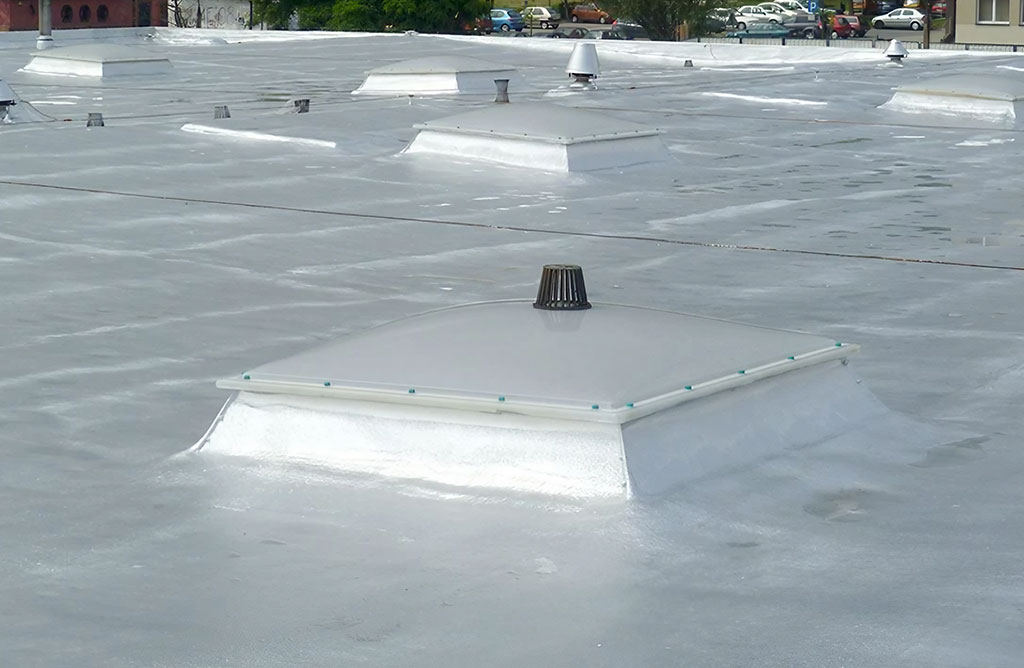
Supporting Energy-Efficient Building Design
Energy efficiency has become an important consideration for building owners and developers.
A building’s energy performance is influenced by its envelope, HVAC systems, lighting, appliances, occupancy, and operating practices.
Insulation contributes to the building envelope.
By reducing unwanted heat transfer, it can complement efficient cooling systems and other energy-management measures.
A well-designed building does not depend on one technology alone.
Roof insulation can work alongside reflective roof treatments, appropriate glazing, shading, ventilation, efficient HVAC systems, and good construction practices.
This integrated approach is more effective than relying on a single measure.
Thermal Insulation in Jaipur’s Climate
Jaipur experiences hot conditions during significant portions of the year, making heat management an important consideration for many buildings.
Roofs exposed to strong sunlight can experience considerable solar heat gain.
This is particularly relevant for concrete roofs, metal roofs, industrial buildings, warehouses, and other structures where large roof surfaces are directly exposed to the sun.
A suitable Thermal Insulation Jaipur strategy can help reduce heat transfer through these surfaces.
However, the appropriate solution depends on the building type and roof construction.
A residential roof, industrial shed, commercial property, and cold-storage facility may require different insulation approaches.
Protecting Building Materials
Thermal insulation can also contribute indirectly to the long-term performance of a roof assembly.
Repeated temperature changes can cause materials to expand and contract.
The impact depends on the material, construction method, climate, detailing, and exposure.
By helping moderate heat transfer, insulation can form part of a broader strategy for managing thermal stresses within a building envelope.
However, insulation should not be considered a replacement for proper waterproofing, structural design, drainage, expansion joints, or construction quality.
Each function has a different purpose.
Thermal Insulation Is Not the Same as Waterproofing
This distinction is particularly important.
Waterproofing is designed primarily to control water penetration.
Thermal insulation is designed primarily to control heat transfer.
Some building systems may combine several functions, but the two should not automatically be treated as interchangeable.
A roof may require both waterproofing and thermal insulation.
A well-designed roof assembly considers moisture management, drainage, thermal performance, structural requirements, and durability together.
Professional contractors should therefore evaluate the complete roof system instead of selecting insulation independently from other construction layers.
Choosing the Right Thermal Insulation Material
The choice of Thermal Insulation Material Jaipur depends on the building and its requirements.
Different materials have different characteristics related to thermal conductivity, density, moisture resistance, fire performance, compressive strength, durability, installation method, and cost.
Common insulation categories used in construction can include rigid boards, flexible insulation, spray-applied systems, reflective systems, and other specialized materials.
The correct choice depends on the application.
For example, a roof requiring walkability may need insulation with suitable compressive strength.
An industrial building may have different performance requirements from a residential property.
The material should therefore be selected based on documented technical properties rather than price alone.
Understanding Thermal Conductivity
Thermal conductivity is one of the key properties used to evaluate insulation.
It indicates how readily heat passes through a material.
Generally, a material with lower thermal conductivity provides greater resistance to heat flow for a given thickness.
However, real-world roof performance involves more than a single laboratory value.
Installation quality, joints, thermal bridges, moisture, thickness, aging, and the complete roof assembly can influence performance.
This is why professional design and installation matter.
Thickness Matters
Insulation thickness affects the overall thermal resistance of the roof system.
Increasing insulation thickness can generally increase resistance to heat flow, although the practical benefit depends on the material and assembly.
The appropriate thickness should be determined based on project requirements, climate, building codes or standards where applicable, energy targets, roof details, available space, and budget.
There is no universal thickness that works for every building.
A qualified professional can evaluate the project and recommend a suitable specification.
Reducing Heat Bridges
Thermal bridges are areas where heat can move more readily through a building envelope than through surrounding insulated areas.
They can occur around structural elements, joints, penetrations, edges, fasteners, and other details.
Even high-quality insulation can perform below expectations if significant thermal bridges are left untreated.
Therefore, Thermal Insulation Services Jaipur should consider detailing as well as the main insulation layer.
Continuity is an important principle.
The insulation system should be planned to minimize unnecessary gaps and discontinuities wherever practical.
Importance of Professional Installation
The quality of installation can significantly affect insulation performance.
Incorrect placement, compression, gaps, poor joints, moisture exposure, or unsuitable fixing methods can reduce the effectiveness of an insulation system.
This is why professional installation is an important part of a roof insulation project.
A reliable contractor should understand the manufacturer’s installation requirements and the specific roof assembly.
The installer should also consider drainage, waterproofing interfaces, penetrations, roof access, maintenance requirements, and other practical details.
Insulation for Different Building Types
Roof thermal insulation can be relevant across a wide range of building categories.
Residential Buildings
Homes can benefit from improved indoor comfort, particularly in rooms located directly beneath exposed roofs.
Insulation can help reduce heat entering the living space during hot weather.
Commercial Buildings
Offices, retail properties, restaurants, and other commercial buildings can experience substantial heat gain through large roof areas.
A suitable insulation strategy can complement air-conditioning systems and improve indoor comfort.
Industrial Buildings
Factories and industrial facilities often have large roof surfaces.
Thermal insulation can become an important consideration for worker comfort, process requirements, equipment environments, and energy management.
Warehouses
Warehouses may have large metal or concrete roof areas exposed to the sun.
Depending on the stored products and operating conditions, thermal control may help create more suitable internal conditions.
Roof Insulation and HVAC Efficiency
Insulation does not replace an efficient HVAC system.
Instead, it can complement one.
If the building envelope allows substantial heat gain, the cooling system must compensate for that heat.
Reducing heat transfer can help lower the cooling load under suitable conditions.
The HVAC designer can consider building-envelope performance when sizing or evaluating cooling requirements.
This demonstrates why insulation should ideally be considered during the early design stages of a building.
New Construction vs Existing Buildings
Roof insulation can be considered both during new construction and renovation.
During new construction, the insulation system can be incorporated into the roof assembly from the beginning.
This may allow better coordination between structural, waterproofing, drainage, and thermal requirements.
Existing buildings may also benefit from roof insulation upgrades.
However, renovation projects require careful assessment.
The existing roof condition, moisture problems, waterproofing, structural capacity, access, and existing insulation should be evaluated before selecting an upgrade.
Signs That a Building May Need Better Roof Insulation
There is no single visual sign that proves a building needs additional insulation.
However, some observations may justify a professional assessment.
These can include rooms that become significantly hotter than other areas, unusually high cooling demand, noticeable temperature differences between floors, an extremely hot roof surface, or an aging roof assembly.
High energy consumption can have many causes, so insulation should not automatically be blamed.
A building-energy assessment can help identify where improvements may have the greatest value.
Combining Insulation With Reflective Roofing
Reflective roofing and thermal insulation address heat management in different ways.
A reflective roof surface can reduce the amount of solar energy absorbed by the roof.
Insulation can reduce heat transfer through the roof assembly.
When appropriately designed, these approaches can complement one another.
The overall roof design should consider the climate, roof material, building use, maintenance requirements, and desired performance.
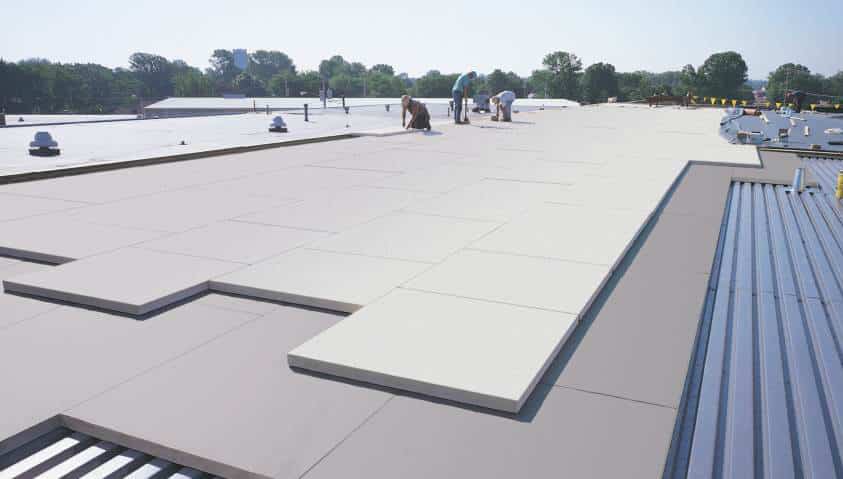
Moisture Management Is Essential
Moisture can affect the performance and durability of building assemblies.
The appropriate roof insulation system should therefore consider moisture exposure and vapor movement where relevant.
Water infiltration can damage insulation and other building components.
Proper drainage and waterproofing are essential.
This is another reason why thermal insulation should be designed as part of the complete roof system rather than treated as an isolated layer.
Fire and Safety Considerations
Insulation products can have different fire-performance characteristics.
The appropriate product should be selected according to the building’s application, applicable regulations, project specifications, and manufacturer’s technical documentation.
Fire safety should never be determined solely from a general description of an insulation category.
Architects, contractors, and project consultants should review the relevant product certifications and technical information before specifying a material.
How Bituchem Can Support Thermal Insulation Requirements
Bituchem provides construction-focused solutions designed around practical building requirements.
For projects considering Thermal Insulation Products Jaipur, selecting the appropriate product should begin with an understanding of the roof assembly, climate exposure, performance requirements, and installation conditions.
Rather than treating every building in the same way, a project-specific approach can help identify the most appropriate solution.
Bituchem’s product and technical approach can support contractors, builders, architects, and property owners who are evaluating thermal protection as part of a broader construction strategy.
The objective is not simply to add an insulation layer.
The objective is to develop a roof system that performs appropriately for the intended application.
What to Consider Before Selecting Thermal Insulation
A successful insulation project starts with the right questions.
Consider the roof type, building use, local weather conditions, required thermal performance, available installation space, moisture exposure, expected loading, maintenance requirements, fire-performance requirements, and project budget.
The expected service environment should also be discussed.
For example, an accessible roof may require different material properties from a roof that will rarely be accessed.
Similarly, a warehouse storing temperature-sensitive products may have different requirements from a residential property.
A technical assessment can help avoid unsuitable product selection.
Why Quality Matters More Than Price Alone
It can be tempting to select the lowest-cost insulation product.
However, the initial purchase price is only one part of the overall cost.
Poor-quality materials or inadequate installation can lead to lower performance, repairs, replacement, and increased operating expenses.
A better evaluation considers product performance, expected service life, installation requirements, maintenance, technical support, and total project value.
This does not mean the most expensive solution is always the best.
The objective is to find the right balance between performance, durability, practicality, and cost.
The Long-Term Value of Roof Thermal Insulation
The value of insulation should be considered over the life of the building.
A well-planned insulation system can contribute to indoor comfort, building-envelope performance, energy management, and occupant satisfaction.
The actual benefits depend on design and installation quality.
When combined with efficient HVAC systems, appropriate roof surfaces, shading, ventilation, and other building-efficiency measures, insulation can become an important part of a comprehensive building-performance strategy.
For modern buildings, this long-term perspective is increasingly important.
FAQs
What is the purpose of roof thermal insulation?
The primary purpose of roof thermal insulation is to reduce the rate of heat transfer through the roof. This can help limit unwanted heat gain during hot weather and support more comfortable indoor conditions.
Why is Thermal Insulation Jaipur important?
Jaipur experiences hot and sunny weather during significant parts of the year. Roofs can absorb considerable solar heat, so suitable thermal insulation can help reduce heat transfer into occupied spaces and complement broader energy-efficiency measures.
What are Thermal Insulation Solutions Jaipur?
Thermal insulation solutions include materials and systems designed to reduce heat transfer through roofs, walls, floors, pipes, and other building components. The appropriate solution depends on the structure, application, material properties, and project requirements.
How do I select Thermal Insulation Material Jaipur?
Selection should consider thermal conductivity, required thickness, moisture resistance, fire performance, compressive strength, durability, installation method, roof design, and applicable project standards. Professional technical advice can help identify the appropriate material.
Can thermal insulation reduce electricity consumption?
Thermal insulation can reduce unwanted heat transfer and may therefore reduce cooling requirements under suitable conditions. Actual energy savings depend on factors such as climate, building design, HVAC efficiency, occupancy, operating schedules, and insulation quality.
Conclusion
Roof thermal insulation has become an important consideration in modern building design because the roof is one of the primary surfaces exposed to solar heat. By reducing unwanted heat transfer, an appropriately designed insulation system can contribute to better indoor thermal comfort and support more efficient building operation. Its value becomes particularly relevant in hot climates where cooling requirements can be significant.
For businesses and property owners researching Thermal Insulation Jaipur, the right approach is to look beyond the product name and evaluate the complete roof system. Thermal Insulation Solutions Jaipur should be selected according to building type, roof construction, climate, required performance, moisture conditions, safety considerations, installation requirements, and long-term objectives. Likewise, professional Thermal Insulation Services Jaipur can help ensure that the selected material is installed correctly and integrated with waterproofing and other roof components.
Bituchem can support projects looking for dependable Thermal Insulation Products Jaipur, with a construction-focused approach to material selection and application. Whether the requirement involves a new building, commercial property, industrial facility, warehouse, or renovation project, a project-specific assessment is essential for choosing an appropriate insulation strategy.
Modern buildings need to perform efficiently throughout their service life. Roof insulation is one component of that performance, working alongside waterproofing, reflective roofing, ventilation, efficient HVAC systems, shading, and sound construction practices. When these elements are planned together, a building can be better prepared to manage heat, improve occupant comfort, and support long-term operational efficiency.
The key is not simply to install insulation, but to choose and implement the Thermal Insulation Systems Jaipur that are appropriate for the building’s actual requirements. With proper planning, suitable materials, professional installation, and ongoing maintenance, roof thermal insulation can become a valuable part of a modern, comfortable, and performance-focused building.
