


Water leakage and moisture penetration are common problems that can affect residential, commercial, and industrial buildings. From damp walls and peeling paint to damaged ceilings, weakened concrete, and corrosion of reinforcement, prolonged water exposure can create serious maintenance challenges. Jaipur’s changing weather conditions, seasonal monsoon rainfall, roof exposure, and variations in building construction make effective waterproofing an important part of property maintenance. Whether it is a newly constructed building or an existing structure experiencing seepage, selecting the right waterproofing method can help protect the property and reduce the risk of recurring water-related damage. Proper surface preparation, suitable waterproofing materials, and professional application are essential for achieving reliable results.
Choosing appropriate Waterproofing Solutions in Jaipur requires understanding where water is entering the structure and what is causing the leakage. Terrace seepage, bathroom leakage, basement moisture, external wall dampness, and water penetration through concrete joints may require different treatment methods. Applying a coating without identifying the actual source of leakage may provide only temporary relief. Bituchem focuses on construction chemicals and building protection solutions that support waterproofing, grouting, and concrete-related applications. By selecting suitable products according to site conditions and following the recommended application process, property owners and construction professionals can improve building protection and maintain the durability of their structures.
Why Waterproofing Is Important for Buildings in Jaipur
Waterproofing is an important construction and maintenance activity because water can gradually affect different parts of a building. When moisture enters concrete, masonry, plaster, or other building materials, it may cause damp patches, paint deterioration, surface cracks, and damage to interior finishes. In some situations, persistent moisture can also contribute to corrosion of embedded reinforcement and deterioration of concrete, particularly when existing defects allow water to reach vulnerable areas.
In Jaipur, roofs and terraces are exposed to sunlight, temperature variations, and seasonal rainfall. Poor drainage, damaged waterproofing layers, construction joints, and cracks can create pathways for water penetration. Waterproofing helps reduce the movement of water through vulnerable surfaces when the correct system is selected and installed properly. It should be considered during new construction as well as renovation and repair projects. A planned waterproofing system can help protect the building structure, reduce maintenance requirements, and support long-term property upkeep.
Common Causes of Water Leakage and Dampness
Before choosing a waterproofing treatment, it is important to understand why water leakage occurs. Buildings may develop moisture problems because of construction defects, ageing materials, inadequate drainage, damaged plumbing, poor surface preparation, or the deterioration of existing waterproofing layers. Even a small opening in a roof, wall, or joint can allow water to enter and gradually affect surrounding surfaces.
Some common causes of water leakage include:
- Cracks in terrace slabs, concrete surfaces, and external walls.
- Damaged bathroom and kitchen waterproofing layers.
- Improper drainage and water accumulation on rooftops.
- Leakage around pipes, water tanks, and plumbing connections.
- Construction joints and poorly sealed structural connections.
- Deteriorated plaster, damaged coatings, and porous surfaces.
Identifying the source of water penetration is the first step towards selecting an effective treatment. For example, a damp patch on an interior wall may be caused by an external wall crack, plumbing leakage, or moisture rising from another part of the structure. Each situation requires a different inspection and repair approach.
Types of Waterproofing Solutions in Jaipur for Different Applications
Different parts of a building experience different types of water exposure. Therefore, a single waterproofing product or method may not be suitable for every application. Waterproofing systems should be selected according to the surface material, movement conditions, water pressure, exposure level, and intended use of the area. Professional assessment helps determine which treatment is appropriate for a specific project.
Common waterproofing applications include terrace waterproofing, roof waterproofing, bathroom waterproofing, basement protection, water tank waterproofing, external wall treatment, and concrete joint sealing. Each application may require a combination of surface preparation, crack treatment, joint detailing, protective coating, or specialised construction chemicals. Bituchem’s construction chemical solutions are relevant to building protection and repair requirements, helping construction professionals consider suitable materials for different site conditions.
Terrace and Roof Waterproofing to Prevent Rainwater Seepage
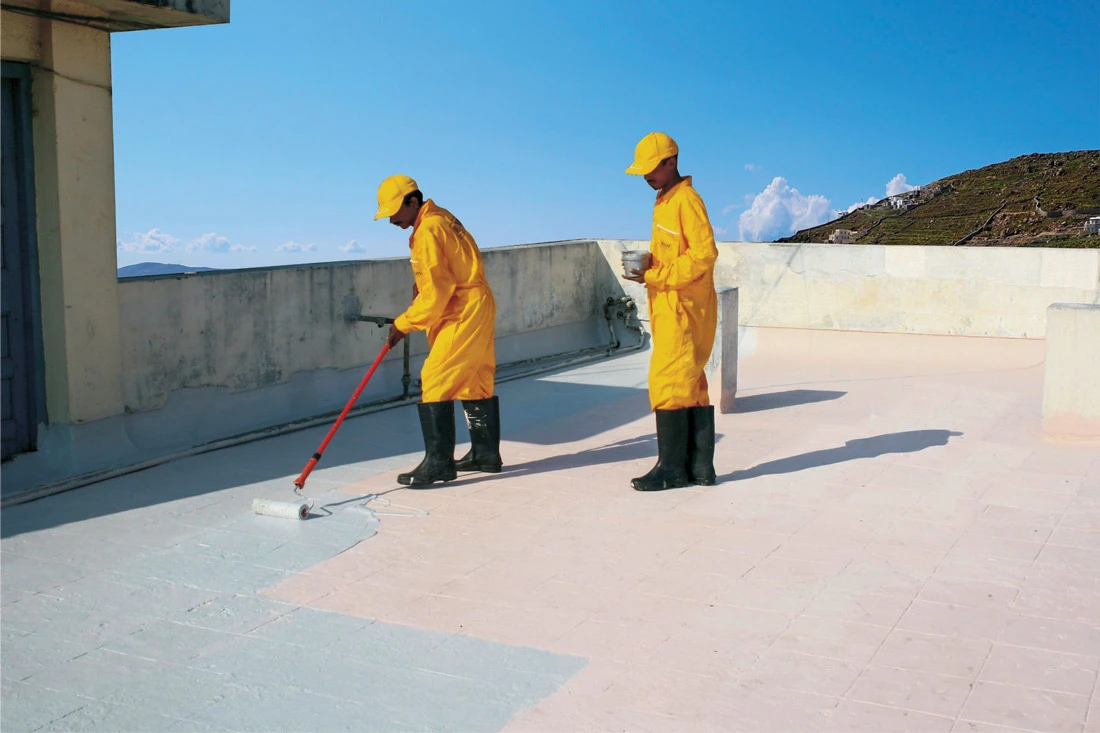
Terraces and rooftops are among the most exposed areas of a building because they receive direct sunlight and rainfall. Over time, cracks, damaged surface layers, improper slope, and blocked drainage outlets can allow water to accumulate and penetrate the roof slab. This may result in damp ceilings, peeling paint, and moisture damage in rooms located below the terrace.
Terrace waterproofing generally begins with a detailed inspection of the roof surface, including cracks, joints, drainage points, and existing coating conditions. Loose material, dust, and damaged layers may need to be removed before treatment. Depending on the surface and project requirements, suitable waterproofing systems may include liquid-applied coatings, cementitious treatments, membranes, or other compatible products. Proper detailing around parapet walls, outlets, and pipe penetrations is especially important because these areas can become common leakage points.
Bathroom and Kitchen Waterproofing
Bathrooms and kitchens require careful waterproofing because they experience regular water usage, cleaning, and moisture exposure. Leakage from these areas can affect ceilings and walls in rooms below or next to them. Water may enter through damaged tile joints, plumbing connections, floor-wall junctions, or gaps around sanitary fittings. If the underlying waterproofing layer is missing or damaged, surface repairs alone may not solve the problem.
Effective bathroom waterproofing should ideally be completed before tile installation during new construction. The substrate must be prepared properly, and the selected waterproofing system should be applied according to the manufacturer’s recommendations. Special attention should be given to corners, pipe penetrations, floor drains, and wall-floor connections. For existing bathrooms, the treatment depends on the source and extent of leakage. Proper diagnosis helps determine whether local joint repairs are sufficient or whether more extensive renovation is required.
Basement Waterproofing and Protection Against Ground Moisture
Basements and below-ground structures can experience water penetration due to groundwater pressure, poor drainage, cracks, and insufficient external protection. Moisture in basement walls and floors may lead to dampness, unpleasant odours, damaged finishes, and deterioration of stored materials. In more severe situations, water ingress can affect the usability of the space and create additional maintenance requirements.
Basement waterproofing requires careful consideration of soil conditions, groundwater levels, structural joints, and the direction of water pressure. Depending on the building design and accessibility, treatment may involve external waterproofing membranes, internal waterproofing systems, joint sealing, drainage arrangements, or injection grouting. Construction joints and cracks should be assessed before selecting a treatment. Bituchem’s expertise in construction chemicals and grouting-related applications makes the selection of suitable repair materials an important consideration for projects involving concrete protection and leakage control.
External Wall Waterproofing to Control Dampness
External walls are continuously exposed to environmental conditions, including rainfall, sunlight, dust, and temperature changes. Cracks in plaster, damaged exterior coatings, gaps around windows, and poorly sealed joints can allow rainwater to enter the wall assembly. Over time, moisture penetration may appear inside the building as damp patches, paint bubbling, plaster damage, or fungal growth in areas that remain damp.
External wall waterproofing focuses on reducing water penetration through exposed surfaces while maintaining compatibility with the existing substrate. The process may involve repairing cracks, removing loose plaster, treating joints, and applying an appropriate protective coating. The surface should be clean, stable, and properly prepared before application. It is also important to inspect window frames, balconies, service openings, and other connection points where water can enter. Choosing the correct waterproofing treatment helps protect exterior finishes and reduces the risk of moisture-related deterioration.
Concrete Waterproofing and the Importance of Construction Chemicals
Concrete is widely used in residential, commercial, and industrial construction, but it is not completely waterproof by itself. Water can move through pores, cracks, construction joints, and other discontinuities, particularly when concrete quality, curing, detailing, or protective measures are inadequate. Waterproofing concrete therefore requires attention to material selection, mix design, construction practices, and surface protection.
Construction chemicals play an important role in several concrete-related applications. Depending on the project, products may include integral waterproofing compounds, protective coatings, repair mortars, grouting materials, sealants, and other specialised treatments. These products serve different purposes and should not be considered interchangeable. For example, a waterproofing coating may protect an exposed surface, while a grout may be used to fill suitable voids or seal particular leakage paths. Bituchem provides construction chemical solutions relevant to grouting and building protection, helping construction professionals select products according to the intended application and technical requirements.
Grouting Solutions for Leakage Control and Concrete Repair
Grouting is an important technique used in construction, repair, and rehabilitation projects. It involves introducing a suitable grout material into cracks, voids, joints, or other designated spaces to improve filling, bonding, or sealing, depending on the material and application. In certain leakage situations, specialised injection grouting may be used to address water movement through cracks or construction joints. However, the correct grout must be selected according to crack conditions, water flow, substrate properties, and the required performance.
Cementitious grouts, epoxy grouts, and polyurethane injection materials have different characteristics and applications. Cementitious grouts may be suitable for selected void-filling and structural applications, while epoxy systems are used in specific bonding and repair situations. Certain polyurethane injection products are designed for particular water-stopping applications. The selection should be based on technical recommendations rather than assuming that one product can solve every leakage problem. Bituchem’s construction chemical and grouting-related solutions are relevant to projects where appropriate material selection and application procedures are essential.
How to Choose the Best Waterproofing Solutions in Jaipur
Selecting the Best Waterproofing Solutions in Jaipur requires more than comparing product prices or choosing the most widely advertised coating. The right solution depends on the location of the leakage, the type of surface, the severity of moisture exposure, and the condition of the existing structure. A product that performs well on a terrace may not be appropriate for a basement wall or a bathroom floor. Understanding the application requirements helps avoid unsuitable treatments and repeated repair expenses.
Before selecting a waterproofing system, property owners and contractors should consider the following factors:
- Identify the leakage source: Determine whether water is entering through cracks, joints, plumbing lines, roofs, or external walls.
- Check surface conditions: Assess cracks, loose plaster, existing coatings, moisture levels, and substrate strength.
- Select application-specific materials: Choose products designed for the relevant waterproofing or repair application.
- Review technical specifications: Check coverage, application thickness, curing requirements, compatibility, and installation instructions.
- Consider professional application: Skilled installation and correct surface preparation are important for system performance.
- Understand maintenance requirements: Ask about inspection, protection, and maintenance recommendations after application.
A well-informed selection process helps ensure that the chosen treatment addresses the actual problem instead of simply covering visible signs of water damage.
Why Professional Application Matters in Waterproofing
Even a suitable waterproofing product may not deliver the expected performance if it is applied incorrectly. Poor surface preparation, incorrect mixing ratios, insufficient coating thickness, missed joints, and inadequate curing can affect the overall waterproofing system. Application conditions such as temperature, humidity, surface moisture, and rainfall may also influence certain products. Following the manufacturer’s technical instructions is therefore essential.
Professional assessment can help identify areas that need additional attention, such as corners, pipe outlets, construction joints, and drainage points. Applicators can also determine whether cracks require repair before a coating is applied. In larger projects, testing and inspection may be required according to the system design and project specifications. Waterproofing should be treated as a complete process involving diagnosis, preparation, material selection, application, and quality checks rather than a simple surface-coating activity.
Signs That Your Property Needs Waterproofing
Water leakage problems may develop gradually, and early signs are sometimes ignored because the damage appears minor. However, visible moisture can indicate that water is entering through a vulnerable part of the building. Identifying these signs early may help property owners investigate the problem before it affects larger areas or causes additional repair work.
Common warning signs include damp patches on ceilings or walls, peeling paint, blistering plaster, recurring mould growth, water stains after rainfall, and persistent moisture near bathrooms or plumbing lines. On terraces, standing water and visible cracks may indicate drainage or surface protection issues. In basements, damp walls and recurring water accumulation may suggest groundwater or drainage-related concerns. If these signs appear repeatedly, the source should be investigated before choosing a repair product or waterproofing treatment.
Why Choose Bituchem for Construction Chemical and Waterproofing Requirements?
Selecting construction chemical products is an important part of maintaining building quality and managing repair work. Different projects require different materials, whether the objective is waterproofing, grouting, concrete repair, joint treatment, or surface protection. Bituchem focuses on construction chemicals and related building applications, helping customers and construction professionals consider suitable products for their project requirements. Understanding the intended use of a product is essential for selecting the correct material and following the recommended application method.
For waterproofing and leakage-related projects, it is important to evaluate the site conditions, identify the source of water penetration, and choose a compatible treatment system. Bituchem’s construction chemical and grouting-related product range can be considered for relevant building protection and repair applications. Customers should review the technical data sheets and application guidelines for individual products to understand their suitability, limitations, and installation requirements. A product-specific approach supports better material selection and helps avoid applying an unsuitable solution to a particular surface or leakage condition.
Conclusion
Water leakage can affect the appearance, usability, and durability of residential, commercial, and industrial buildings. From terrace seepage and bathroom leakage to basement moisture and external wall dampness, every waterproofing problem requires proper identification and an application-specific treatment. Choosing suitable materials, preparing surfaces correctly, sealing vulnerable joints, and following technical guidelines are important steps in creating an effective waterproofing system.
If you are exploring Waterproofing Solutions in Jaipur, it is important to consider the actual source of leakage and the conditions of your building before selecting a product. Whether you are researching Waterproofing in Jaipur for a new construction project or looking for the Best Waterproofing in Jaipur for an existing property, the right combination of inspection, suitable construction chemicals, and professional application can help protect your structure from moisture-related damage. Bituchem offers construction chemical and grouting-related solutions for relevant building applications, supporting informed product selection for construction and repair requirements.
