


Waterproofing is an important part of protecting buildings from moisture, seepage, dampness, and water-related deterioration. Whether the application is on a terrace, bathroom, basement, balcony, foundation, roof, swimming pool, or another exposed surface, the right waterproofing approach depends on the condition and purpose of that particular area. Choosing a product simply because it is described as “waterproof” may not always provide the expected result. The surface condition, water exposure, movement, temperature changes, drainage, substrate, and application method all need to be considered before selecting a waterproofing system.
For homeowners, builders, contractors, architects, and property developers looking for Waterproofing Solutions in Jaipur, understanding these differences can make the selection process much easier. Jaipur’s climate includes hot summers, seasonal rainfall, and significant temperature variations, so waterproofing systems need to be selected according to the specific building conditions. Bituchem provides construction and waterproofing solutions designed for different building applications, helping professionals and property owners consider the right approach for protecting surfaces from moisture-related problems. The objective should always be to select a compatible waterproofing system and apply it correctly rather than treating every surface in exactly the same way.
Why Waterproofing Selection Matters
Water can enter a building through cracks, joints, porous materials, damaged finishes, poorly designed drainage systems, construction gaps, or areas where the waterproofing layer has deteriorated. Once moisture enters a structure, it can contribute to damp patches, peeling paint, efflorescence, corrosion, mold growth, unpleasant odors, and deterioration of certain construction materials.
The right waterproofing system creates a barrier or protective layer that helps reduce water penetration. However, waterproofing is not a single product category with one universal solution. Different applications have different requirements.
A terrace exposed to direct sunlight and rain needs a different consideration from an internal bathroom. A basement below ground level faces different water pressure conditions from a balcony. Similarly, a concrete water tank has different requirements from a masonry wall.
Understanding the application before selecting the waterproofing method is therefore one of the most important steps.
What Are Waterproofing Solutions?
Waterproofing solutions are systems, materials, and application methods used to reduce or prevent unwanted water penetration into buildings and structures. Depending on the project, waterproofing may involve coatings, membranes, cementitious systems, sealants, protective layers, drainage arrangements, joint treatments, or combinations of different methods.
The most appropriate system depends on the substrate and the type of exposure. Factors such as whether the surface is concrete, masonry, plaster, tile, metal, or another material can affect product compatibility.
A professional assessment should also consider whether the problem is caused by surface water, rising dampness, plumbing leakage, groundwater pressure, cracks, or inadequate drainage. Treating only the visible damp patch without addressing the source can lead to recurring problems.
How to Choose Waterproofing for Different Surfaces
Before selecting a waterproofing product, begin by identifying the surface and understanding how it interacts with water. The following applications are among the most common areas where waterproofing is required.
Terrace and Roof Waterproofing
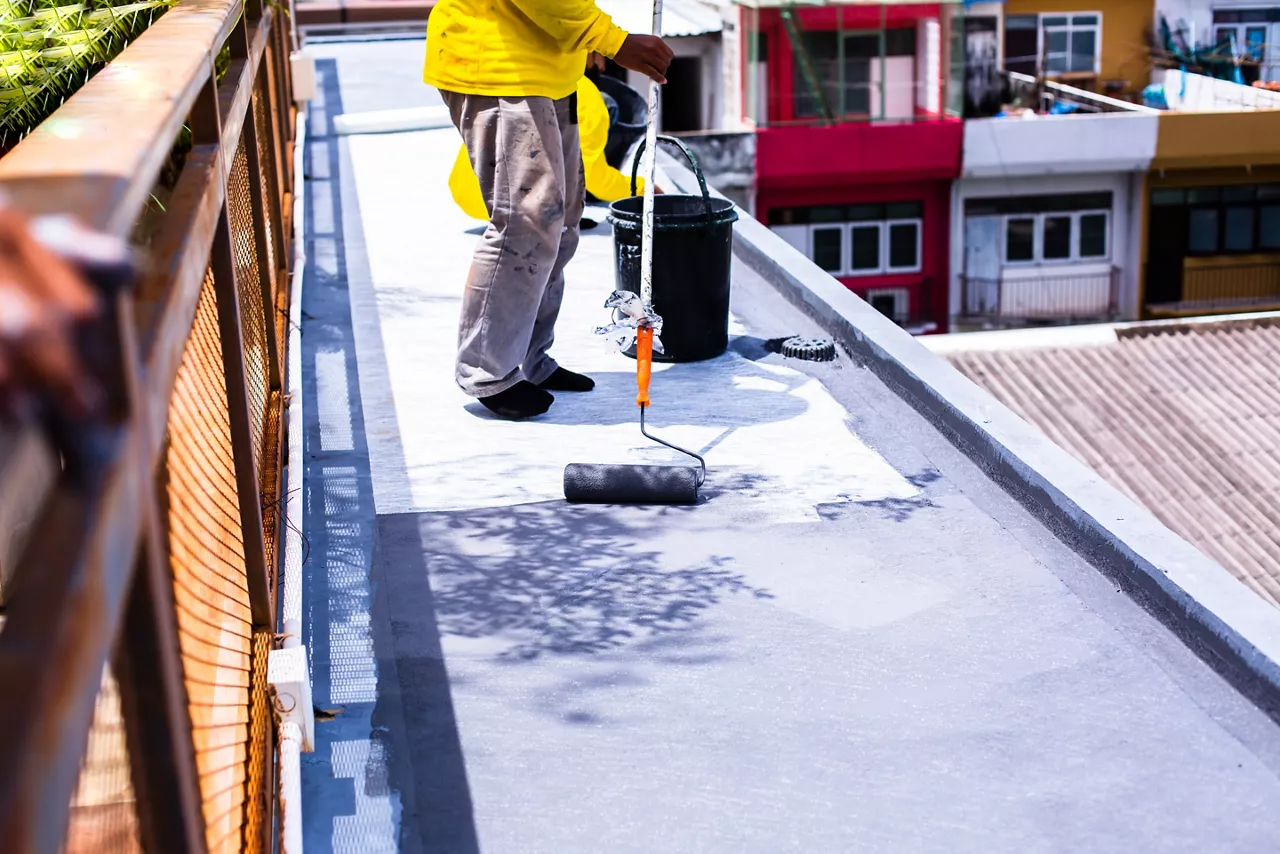
Terraces and flat roofs are continuously exposed to environmental conditions. During rainfall, water may collect on areas with inadequate slope or blocked drainage, while strong sunlight and heat can cause repeated expansion and contraction of the roof surface.
For terrace waterproofing, the system should be selected according to the existing substrate, condition of the surface, drainage arrangement, and expected exposure. Cracks and construction joints should be examined before applying any waterproofing layer.
Surface preparation is especially important. Dust, loose material, deteriorated coatings, and contaminants may affect adhesion. Any structural or significant cracks should be assessed and treated appropriately before the waterproofing system is applied.
A waterproofing solution for a terrace should therefore be considered as part of a complete roof-protection strategy rather than as a simple coating applied over an existing problem.
Bathroom Waterproofing
Bathrooms are exposed to frequent water contact, making waterproofing an important consideration during construction and renovation. Water can penetrate through joints, corners, pipe penetrations, floor-wall junctions, and damaged surfaces.
Bathroom waterproofing should be planned beneath the final finishes where appropriate. Special attention should be given to corners and areas around plumbing fixtures because these locations can become vulnerable to water penetration.
Tile grout and surface finishes alone should not always be treated as the primary waterproofing barrier. A properly selected underlying waterproofing system can provide additional protection to the substrate.
Before installation, the surface should be clean, stable, and suitable for the selected system. Pipe penetrations and junctions should be treated according to the manufacturer’s recommendations.
Basement Waterproofing
Basements can face more challenging moisture conditions because they are located below ground level. Depending on the site and groundwater conditions, water may exert pressure against basement walls and floors.
Basement waterproofing therefore requires careful consideration of both water resistance and drainage. If groundwater pressure is significant, simply applying a surface coating may not address the complete problem.
A suitable basement waterproofing strategy may involve external waterproofing, internal systems, drainage, crack treatment, joint detailing, or combinations of these approaches depending on the construction stage and site conditions.
For existing buildings, identifying the source and path of water entry is particularly important before selecting a remedial solution.
Balcony Waterproofing
Balconies are exposed to rainfall, temperature variations, sunlight, and regular foot traffic. Poor drainage or damaged surfaces can allow water to penetrate into the slab or adjacent walls.
A balcony waterproofing system should work with the existing substrate and final floor finish. Proper slope toward drainage points is essential because even a highly effective waterproofing layer can face unnecessary stress if water continuously pools on the surface.
Special attention should also be given to wall-floor junctions, expansion joints, railing penetrations, and drainage outlets.
Waterproofing for Concrete Surfaces
Concrete is widely used in foundations, roofs, basements, tanks, balconies, and other structural elements. Although concrete appears solid, it is not completely impermeable and can develop cracks or pathways through which water can migrate.
Waterproofing for concrete should therefore take into account the condition of the concrete, crack patterns, construction joints, water pressure, and intended use of the structure.
Before application, laitance, dust, oil, loose particles, and other contaminants should generally be removed according to the requirements of the selected system. The manufacturer’s technical instructions should be followed for surface preparation, mixing, application thickness, curing, and re-coating.
Waterproofing for Foundations
Foundations are particularly important because they are directly connected to the structural base of a building and may come into contact with soil moisture or groundwater.
Foundation waterproofing should ideally be considered during the initial construction stage. The system should be selected according to soil conditions, groundwater exposure, foundation design, drainage provisions, and the type of construction.
For existing structures experiencing dampness, simply coating the interior wall may not resolve the underlying issue if water is entering from outside. A qualified professional may need to assess the source and determine the appropriate remedial approach.
Waterproofing for Water Tanks
Water tanks and other structures that hold water require waterproofing systems specifically suitable for the intended application. Product compatibility is particularly important because the waterproofing material may be in direct contact with stored water.
The selected system should have appropriate technical documentation for the intended use. Application must also follow manufacturer instructions regarding substrate preparation, mixing, curing, and subsequent use of the tank.
Water storage structures should never be treated like ordinary external walls simply because both surfaces are made from concrete.
Waterproofing for Swimming Pools
Swimming pools require continuous water resistance because the structure is exposed to water for extended periods. The waterproofing system needs to work with the pool construction and final finish.
Corners, construction joints, pipe penetrations, drains, and changes in plane require careful detailing. Cracks or structural movement should also be evaluated before the waterproofing system is selected.
A complete pool waterproofing strategy should consider the substrate, water pressure, movement, tile or finish system, drainage, and compatibility between layers.
How Climate Affects Waterproofing in Jaipur
When considering Waterproofing Solutions in Jaipur, local climate conditions should be part of the planning process. Jaipur experiences high temperatures during summer, seasonal monsoon rainfall, and periods of relatively dry weather.
Repeated heating and cooling can cause construction materials and surface layers to expand and contract. During the rainy season, roofs and terraces may receive substantial water exposure within a relatively short period.
This means waterproofing selection should consider both water exposure and environmental conditions. The system should be appropriate for the substrate and the expected movement or exposure of the surface.
Good drainage is equally important. Waterproofing and drainage should work together rather than being treated as completely separate issues.
Why Surface Preparation Is Critical
Even a suitable waterproofing material can perform poorly if the surface is not properly prepared. Adhesion, coverage, curing, and long-term performance can all be affected by dust, loose particles, oil, existing coatings, moisture conditions, cracks, and surface irregularities.
Before waterproofing, the substrate should be inspected carefully. Damaged or unstable areas should be repaired as required, and cracks and joints should be treated according to the selected system.
Following the manufacturer’s application instructions is essential. This includes mixing ratios, application thickness, drying or curing periods, number of coats, and environmental conditions.
Waterproofing should never be viewed as simply painting a surface with a water-resistant material.
How to Choose Waterproofing Based on Water Exposure
Another important factor is understanding where the water is coming from. Surface water from rainfall is different from groundwater pressure. Occasional splashing in a bathroom is different from continuous water exposure in a tank.
For above-ground exposed surfaces, protection from rain, sunlight, and temperature changes may be important. Below-ground structures may require consideration of hydrostatic pressure and drainage. Internal wet areas may need special attention around joints and plumbing penetrations.
Identifying the type of exposure allows the waterproofing system to be selected more logically.
Waterproofing and Crack Treatment
Cracks can provide direct pathways for water. However, not every crack should be treated in exactly the same way.
Hairline surface cracks may have different causes and implications compared with structural cracks, active cracks, or joints designed to accommodate movement. The appropriate treatment depends on the nature and location of the crack.
Before waterproofing over cracked concrete or masonry, the underlying cause should be understood where necessary. Simply covering an active crack with a surface coating may not provide a durable solution.
Importance of Drainage
Waterproofing works most effectively when the building has appropriate drainage. A waterproof surface that continuously experiences standing water may be exposed to conditions it was not designed to handle.
Terraces, balconies, roofs, basements, and other areas should have appropriate drainage paths. Outlets should remain clear, slopes should direct water appropriately, and construction details should prevent water from becoming trapped.
For this reason, waterproofing inspections should include drainage rather than focusing exclusively on the waterproofing material.
Common Waterproofing Mistakes to Avoid
One common mistake is choosing a product solely because it is marketed as waterproof. Different products have different intended uses, and compatibility with the surface and environment matters.
Another mistake is applying waterproofing over an unstable or contaminated surface. Poor preparation can reduce adhesion and create premature failure.
Ignoring cracks, joints, drainage, or plumbing issues is another common problem. Waterproofing cannot always compensate for an underlying construction or water-management issue.
Finally, applying a thicker layer than recommended does not automatically produce better waterproofing. Manufacturers specify application requirements based on the product’s formulation and intended performance. Following the technical instructions is generally more appropriate than improvising application thickness.
Why Choose Bituchem for Waterproofing Requirements?
Bituchem provides construction and waterproofing solutions for different building applications. The product selection can be considered according to the surface, exposure, project requirements, and application conditions.
For property owners, builders, contractors, and construction professionals, the first step should be identifying the specific waterproofing requirement rather than selecting a product without assessing the surface. Bituchem’s waterproofing solutions can be explored for projects involving different construction areas where protection from moisture and water penetration is required.
A professional approach includes appropriate surface preparation, correct product selection, application according to technical recommendations, and attention to details such as joints, cracks, drainage, and curing.
How to Select Waterproofing Contractors in Jaipur
Choosing the right material is only one part of a successful waterproofing project. The quality of application can be equally important. When searching for waterproofing contractors in Jaipur, consider their experience with the specific type of project you have.
Ask whether they have handled similar applications, how they inspect the existing surface, what preparation they recommend, which waterproofing system they propose, and how they plan to address cracks, joints, drainage, and other vulnerable areas.
A professional contractor should be able to explain the proposed system clearly rather than simply promising that a particular coating will solve every type of leakage.
It is also useful to understand the scope of work, number of coats, preparation requirements, curing period, expected project timeline, and maintenance recommendations before work begins.
Top Waterproofing Contractors in Jaipur: What Should You Check?
When researching Top waterproofing contractors in Jaipur, avoid evaluating contractors only through promotional claims. Instead, look for evidence of relevant project experience and a clear technical approach.
The contractor should inspect the surface before recommending a solution. They should understand whether the issue is caused by rainwater, plumbing leakage, groundwater, cracks, poor drainage, or another source.
A proper quotation should ideally explain the work involved rather than simply listing a waterproofing product. This makes it easier to compare different proposals based on the actual scope of work.
Best Waterproofing Contractors in Jaipur for Different Applications
People searching for the Best waterproofing contractors in Jaipur should first identify what type of waterproofing they need. Terrace waterproofing, bathroom waterproofing, basement waterproofing, foundation protection, water-tank treatment, and industrial applications can require different approaches.
The most suitable contractor depends on whether they have experience with the specific surface and water-exposure conditions involved. A contractor experienced in residential terraces may not necessarily specialize in large industrial structures or complex basement waterproofing.
For this reason, matching contractor experience to project requirements is more useful than relying only on generic descriptions.
FAQs
1. How do I choose the right waterproofing solution?
Start by identifying the surface, source of water, level of exposure, existing damage, drainage conditions, and intended use of the area. Then select a waterproofing system that is technically compatible with those conditions and follow the manufacturer’s application instructions.
2. What are the most common areas requiring waterproofing?
Common applications include terraces, roofs, bathrooms, balconies, basements, foundations, water tanks, swimming pools, retaining structures, and other areas exposed to moisture or water.
3. Can the same waterproofing product be used on every surface?
Not necessarily. Different surfaces and applications can have different requirements. A product suitable for a terrace may not be suitable for a water tank, basement, or swimming pool. Always check the manufacturer’s technical documentation and intended application.
4. Why is surface preparation important before waterproofing?
Surface preparation helps ensure that the waterproofing system can properly adhere and perform as intended. Dust, loose material, oil, cracks, damaged areas, and unsuitable existing coatings may affect the result if they are not addressed appropriately.
5. How can I find waterproofing contractors in Jaipur?
Look for contractors with relevant experience in your specific application. Ask about surface inspection, proposed waterproofing systems, preparation methods, crack and joint treatment, drainage, application procedures, timelines, and maintenance recommendations before hiring.
Conclusion
Choosing waterproofing for different surfaces requires more than selecting a product with a waterproof label. The surface, water source, environmental exposure, structural condition, drainage, movement, and intended use should all be considered before deciding on a system.
For Waterproofing Solutions in Jaipur, a practical approach is to first diagnose the moisture problem, then select a compatible waterproofing method and ensure that the surface is properly prepared before application. Whether the requirement involves a terrace, bathroom, balcony, basement, foundation, water tank, or another structure, the solution should be matched to the specific conditions of the project.
Bituchem offers waterproofing solutions for construction applications where protection against moisture and water penetration is required. By combining suitable product selection with correct surface preparation, application, detailing, and drainage considerations, property owners and construction professionals can develop a more systematic approach to waterproofing and long-term building protection.
