


Grouting is an important part of modern construction because it helps fill gaps, improve load transfer, stabilize structural elements, and support the long-term performance of concrete structures. From industrial machinery foundations and commercial buildings to bridges, infrastructure projects, and structural repairs, the right grouting material can make a significant difference in the strength, stability, and durability of a construction project. However, not every grout is suitable for every application. Different projects require different material properties depending on load conditions, exposure to moisture, gap dimensions, substrate condition, and installation requirements. Understanding these factors helps contractors, engineers, builders, and project owners make informed decisions when selecting grouting materials.
For construction companies and industrial facilities in Rajasthan, selecting suitable grouting and anchoring solutions in Jaipur requires careful consideration of the project’s technical requirements and environmental conditions. Cementitious grout, non-shrink grout, epoxy grout, and chemical anchoring systems each serve specific purposes, and using an unsuitable product can lead to poor bonding, cracking, leakage, or reduced performance. Bituchem can be considered when exploring grouting and construction chemical solutions for projects that require appropriate material selection and application planning. By understanding the available options, their benefits, and their limitations, construction professionals can choose a grouting solution that meets project specifications, supports structural performance, and helps control maintenance costs over time.
What Is Grouting in Construction?
Grouting is the process of placing a flowable or injectable material into gaps, cavities, joints, voids, or spaces beneath and around structural components. Once the grout hardens or cures, it fills the required space and provides support, sealing, bonding, or load transfer, depending on the material used. Grouting is commonly applied beneath machinery baseplates, around anchor bolts, in concrete cracks, between structural components, and in areas where voids need to be filled.
The material selected for grouting depends on the purpose of the application. Cement-based grout is commonly used for filling gaps and providing support, while epoxy grout may be selected where higher strength, adhesion, or chemical resistance is required. Specialized injection grouts may be used to address cracks or water seepage, provided the product is suitable for the crack condition and the intended repair.
Choosing the right material is essential because grout must perform under the actual conditions of the project. A grout used beneath heavy industrial equipment may need to withstand substantial loads and vibration, while grout used for sealing a crack may require suitable flow characteristics and compatibility with the surrounding concrete. This is why professional assessment is valuable before selecting a product.
Why Choosing the Right Grouting Solution Matters
The right grouting material helps construction professionals achieve the intended performance of a structural connection, foundation, or repair. Incorrect material selection can create problems such as incomplete filling, poor adhesion, shrinkage, cracking, water penetration, or inadequate load transfer. These issues may increase maintenance requirements and affect the service life of the structure.
For example, a machinery foundation may require grout with suitable compressive strength, flowability, and resistance to operational vibration. A concrete repair project may need an injection material capable of penetrating the crack or void being treated. Similarly, an anchoring application requires a system compatible with the anchor type, base material, installation conditions, and expected loads.
When comparing industrial grouting solutions in Jaipur, project teams should evaluate the actual site conditions instead of selecting materials based only on price or general product descriptions. Correct surface preparation, accurate mixing, proper placement, curing, and adherence to manufacturer instructions are equally important for achieving the desired results.
Types of Grouting Solutions Used in Construction Projects
Different grouting materials are designed for different construction applications. Understanding the main types makes it easier to identify the most suitable option for a particular project.
1. Cementitious Grouting Solutions
Cementitious grout is made using cement-based materials and may contain selected additives to improve flow, strength development, workability, or other performance characteristics. It is widely used in construction because it can provide economical filling and support for many concrete and masonry applications.
Cementitious grouts are commonly considered for baseplate grouting, structural void filling, precast concrete connections, and selected foundation applications. Non-shrink cementitious grout is especially useful where dimensional stability and reliable contact between the baseplate and supporting surface are important. However, performance depends on the specific formulation, water content, placement conditions, and curing process.
Before selecting a cementitious grout, engineers should review the required compressive strength, flow properties, setting time, application thickness, and exposure conditions. The product should also be compatible with the substrate and designed for the intended loading requirements.
2. Epoxy Grouting Solutions
Epoxy grout generally consists of resin and hardener components that react to form a hardened material. Depending on the formulation, epoxy grout can provide high compressive strength, strong adhesion, and resistance to various chemicals and demanding operating conditions. These characteristics make it a potential option for specialized industrial and machinery foundation applications.
Epoxy grouting solutions in Jaipur may be relevant for factories, manufacturing units, processing facilities, and other industrial environments where equipment foundations require a suitable high-performance grout. Epoxy-based products can also be used in certain repair and anchoring applications when their technical specifications match the project requirements.
However, epoxy grout is not automatically the right choice for every application. It can have different cost, temperature, mixing, pot-life, and placement requirements compared with cementitious grout. The substrate condition and moisture limitations specified by the manufacturer must be checked before installation. Correct proportioning and handling of the resin and hardener are essential for proper curing and performance.
3. Chemical Grouting Solutions
Chemical grouting involves injecting specialized materials into cracks, joints, soil, or voids to achieve a specific purpose, such as sealing water pathways, filling cavities, or improving ground conditions. Depending on the material and application, these systems may include polyurethane, acrylate, or other purpose-designed injection resins.
Chemical grouting solutions in Jaipur may be considered for selected leakage-control projects, underground structures, basements, tunnels, and concrete repair work. The correct material depends on whether the objective is to stop active water ingress, fill a crack, seal a joint, or improve the properties of the surrounding ground.
It is important to identify the source of the problem before choosing a chemical grout. For instance, active water leakage may require a different material and injection strategy from a dry structural crack. Chemical grouting should be performed by trained personnel using suitable equipment and safety procedures, particularly where the work involves pressurized injection or reactive chemicals.
4. Non-Shrink Grouting Solutions
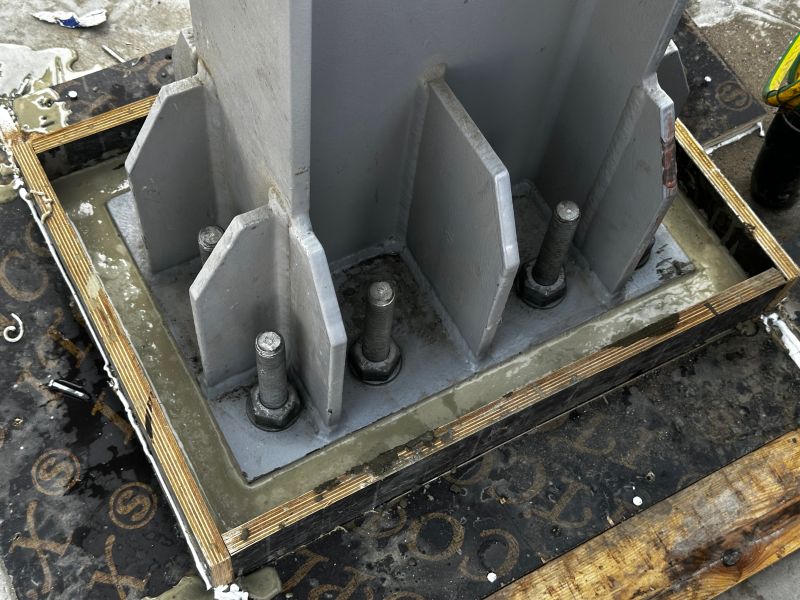
Non-shrink grout is formulated to limit shrinkage under specified test conditions and help maintain contact between the grout and adjacent surfaces. It is commonly used beneath equipment baseplates, columns, structural supports, and machinery foundations where gaps must be filled to provide a stable bearing surface.
The phrase “non-shrink” does not mean that the material can be installed without preparation or that it will perform equally well in every environment. The correct mixing ratio, placement method, curing conditions, and specified thickness remain important. Contractors should follow the product’s technical data sheet and verify that the selected grade is suitable for the intended load and installation conditions.
5. Cement and Resin Injection Grouts
Injection grouts are used where material needs to enter cracks, cavities, joints, or other inaccessible spaces through ports or injection equipment. Cement-based injection grout may be suitable for certain larger voids, while resin-based materials can be useful for selected cracks or water-sealing applications.
The selection depends on crack width, moisture conditions, movement, structural significance, and the required result. A crack caused by ongoing structural movement, for example, may need a different repair strategy from a stable crack that requires bonding or sealing. Assessment by a qualified professional is important when the crack may affect structural safety.
How to Choose the Right Grouting Solution for Your Project
Selecting the right grout involves evaluating the application, material characteristics, site conditions, and installation method. The following considerations can help project teams make a more informed decision.
Understand the Purpose of the Application
Start by identifying what the grout needs to achieve. Is the purpose to support a machinery baseplate, fill a structural void, seal a water leak, repair a crack, or secure an anchor? Each application has different performance requirements.
For example, machinery foundation grouting usually focuses on complete filling, suitable compressive strength, and reliable load transfer. Crack injection may instead prioritize penetration, bonding, or water sealing. Chemical anchoring requires a product specifically intended to bond an anchor into an approved base material under defined installation conditions.
Clearly defining the purpose helps narrow down the available products and reduces the risk of selecting a material that is unsuitable for the job.
Evaluate Load and Strength Requirements
Strength requirements are particularly important in industrial and structural applications. The selected grout may need to support static loads, dynamic loads, vibration, or repeated operational stresses. Engineers should review the expected load conditions and compare them with the product’s documented performance characteristics.
Compressive strength alone is not enough to determine suitability. Bond characteristics, stiffness, creep behavior, temperature exposure, and compatibility with the base material may also matter, depending on the application. Where the grout supports critical equipment or structural components, selection should follow the engineering design and relevant project specifications.
Check Environmental and Site Conditions
Site conditions can influence the behavior of grout during installation and throughout its service life. Temperature, moisture, surface condition, chemical exposure, and available curing time should all be evaluated before work begins.
In Jaipur and other parts of Rajasthan, hot weather can affect the working time and curing behavior of some grouting materials. Contractors should follow the manufacturer’s guidance for material storage, mixing, placement temperature, and curing. They should also avoid adding excess water or making unapproved adjustments to change the material’s workability.
Industrial facilities may face additional conditions such as oils, cleaning chemicals, vibration, or temperature changes. A grout should be selected only after confirming that its documented properties match the actual exposure conditions.
Consider Flowability and Application Thickness
The grout must be able to reach the spaces it is intended to fill. For baseplates, narrow gaps, complicated shapes, and areas with restricted access, flowability and placement method are important considerations. A product that is too stiff may not fill the space completely, while a material with unsuitable consistency may separate or bleed.
Review the recommended placement thickness and method before ordering the material. Some products are designed for thin applications, while others can be used for deeper pours when installed according to their instructions. The size and geometry of the gap should be measured accurately so the correct grade and quantity can be determined.
Compare Durability and Maintenance Requirements
A grouting solution should meet the expected service conditions of the structure or equipment. Projects exposed to water, chemicals, repeated loading, or vibration may require materials with specific resistance and durability characteristics.
Consider the expected maintenance schedule, ease of inspection, repair options, and likely service life. A lower initial material cost may not provide the best overall value if the application requires frequent repairs. Conversely, a more specialized grout may be unnecessary for a simple filling task where a suitable conventional material meets the project specifications.
Review Product Documentation and Technical Support
Before making the final decision, review the manufacturer’s technical data sheet, application instructions, safety information, and relevant test data. Confirm the product’s intended uses, mixing requirements, working time, curing conditions, recommended thickness, and limitations.
For complex construction projects, consult the project engineer or a qualified technical representative. Professional guidance is particularly valuable when the work involves structural loads, active water leakage, critical machinery, or chemical anchoring. Selecting materials according to documented requirements helps create a more reliable installation plan.
Understanding Chemical Anchoring and Anchor Bolt Grouting
Grouting and anchoring are related construction activities, but they serve different purposes. Grouting generally fills gaps, supports components, or seals voids. Anchoring secures a component to a base material such as concrete or masonry using a designed mechanical or bonded anchoring system.
Chemical anchoring solutions in Jaipur may be used where threaded rods or reinforcing bars need to be bonded into suitable concrete or masonry, subject to the anchor system’s approvals and installation requirements. The performance of a chemical anchor depends on factors such as base-material strength, hole diameter and depth, cleaning procedure, resin type, curing time, edge distances, spacing, and applied load.
Anchor bolt grouting in Jaipur is often relevant to machinery foundations, steel structures, equipment supports, and baseplate installations. Depending on the design, grout may fill the space beneath a baseplate and provide bearing support, while the anchor bolts resist the loads for which they have been designed. Grout should not be treated as a substitute for a correctly designed anchoring system.
For safety-critical applications, the anchor and grout specifications should be established by the responsible engineer. Installation must follow the manufacturer’s requirements, including hole preparation, resin curing time, bolt positioning, and any specified testing or inspection procedures.
Common Mistakes to Avoid When Selecting Grouting Materials
One common mistake is choosing a product based only on its price without checking whether it suits the application. A second is using the same grout for every task, even when the required strength, flowability, chemical resistance, or water-sealing performance differs. These decisions can increase the risk of poor results and avoidable repair work.
Another mistake is overlooking surface preparation. Dust, loose concrete, oil, standing water, and other contaminants may interfere with bonding or placement if they are not addressed according to the product instructions. Incorrect mixing, poor placement, inadequate curing, and failure to follow the recommended application thickness can also affect performance.
Finally, construction teams should not assume that all cracks are suitable for injection or that every anchoring application can be handled with a general-purpose resin. The cause of the defect, the condition of the base material, and the required structural performance should be evaluated before work begins.
Applications of Grouting and Anchoring Solutions in Jaipur
Grouting and anchoring materials are used across a range of construction and industrial projects. Commercial buildings may require grouting beneath structural supports or equipment baseplates, while manufacturing facilities may need solutions for machinery foundations and anchor installations. Infrastructure projects may use specialized grouting for void filling, selected structural repairs, and connections between concrete components.
Factories, warehouses, workshops, and processing facilities may also require chemical anchoring systems for approved installations involving threaded rods or reinforcing bars. In each case, the right product depends on the engineering design, base material, loading conditions, exposure, and installation method.
Businesses evaluating structural grouting services in Jaipur should look beyond the material name and consider the complete application process. This includes assessing the site, choosing a suitable product, preparing the surface, applying the material correctly, and checking the finished work against the project specifications. Bituchem can be explored as a resource for construction chemical and grouting-related requirements, with product selection based on the specific project and technical guidance.
Why Consider Bituchem for Grouting Requirements?
Choosing grouting materials is an important decision for contractors, builders, engineers, and industrial project managers. The appropriate solution should meet the technical needs of the application while remaining practical to install and maintain. Bituchem can be considered when evaluating grouting and anchoring solutions for construction and industrial work in Jaipur.
Before finalizing a product, businesses should share relevant project details, including the application, base material, gap dimensions, load requirements, moisture exposure, and site conditions. This information helps determine which type of grout or anchoring system should be evaluated. Where necessary, project teams should also consult the responsible engineer and review the manufacturer’s technical documentation.
A project-specific approach helps avoid unnecessary material selection errors and supports better planning. Instead of choosing a product solely because it is described as epoxy grout, chemical grout, or non-shrink grout, contractors should verify that the selected grade is intended for the actual task.
Conclusion
Choosing the right grouting solution for a construction project requires a clear understanding of the application, load requirements, environmental conditions, material properties, and installation process. Cementitious grout may be suitable for many general construction and support applications, while non-shrink grout is commonly considered for baseplates and structural bearing areas. Epoxy grout can be appropriate for selected demanding industrial applications, and chemical injection grouts may help address specific leakage, crack, or void-filling problems. Chemical anchoring systems and anchor bolt grouting must be selected according to the design requirements and the function each system is intended to perform.
For contractors and industrial businesses looking for grouting and anchoring solutions in Jaipur, a structured selection process can improve material suitability, installation planning, and long-term performance. Reviewing technical documentation, preparing the substrate correctly, following the manufacturer’s instructions, and involving qualified professionals in critical applications are essential steps. Bituchem can be considered when exploring suitable construction chemical and grouting options for a project. The final choice should always be based on the specific site conditions, engineering requirements, and verified product specifications.
FAQs
1. What is the best grouting solution for construction projects?
The appropriate grouting solution depends on the application. Cementitious grout is used for many general filling and support applications, non-shrink grout is commonly used beneath baseplates, and epoxy grout may be suitable for selected industrial environments. The final choice should follow project specifications and manufacturer guidance.
2. What is the difference between cementitious grout and epoxy grout?
Cementitious grout uses cement-based materials and is common in many construction applications. Epoxy grout uses resin and hardener components and may provide higher strength, adhesion, or chemical resistance depending on the formulation. Both must be selected according to the intended application and site conditions.
3. Where are industrial grouting solutions used?
Industrial grouting solutions are used in applications such as machinery foundations, equipment baseplates, industrial floors, structural supports, and selected repair works. The product must be suitable for the expected loads, vibration, exposure, and installation requirements.
4. What are chemical anchoring solutions used for?
Chemical anchoring systems bond compatible threaded rods or reinforcing bars into approved base materials using a specified resin. They may be used for structural connections, equipment supports, and other engineered installations when the system is designed and installed according to its requirements.
5. Why is non-shrink grout used for anchor bolts and baseplates?
Non-shrink grout is formulated to limit shrinkage under specified conditions and help maintain contact between the baseplate and supporting surface. Its suitability depends on the required strength, installation thickness, load conditions, and product specifications.
